I Took Cayenne For 6 Months For My Circulation. Here’s What Finally Made A Difference For My Arteries.
It wasn’t the cayenne. Once I read the research behind it, I found the gap most cayenne labels skip, and a Japanese enzyme that offers a completely different approach to long-term artery and circulation support.
By Emily P.Health & Wellness WriterLast Updated October 28, 2026
DAY 180no change in my readings
How it started
It Was Never A Scare. It Was The Small Things.
Cold hands at my daughter’s weekend games, even with gloves on. Heavy legs by mid-afternoon on days I’d barely moved. Needing a breath at the top of the stairs at work.
Nothing dramatic, so it was easy to ignore. I’m 47. I put it down to the late forties.
My numbers were never “bad”. Just close enough to the line that every check-up ended with “let’s keep an eye on it”.
“Keep an eye on it” means nothing needs doing yet, but something might, eventually. So I did what most people do: I went to the pharmacy and started reading labels.
The pharmacy aisle: plenty of promises, very few numbers.
Every label said “supports circulation” or “supports heart health”. None said how, how much, or for how long.
Cayenne came up everywhere: chili-eaters seem to do well, capsaicin widens blood vessels, and it’s natural and cheap. It made sense, so I gave it six careful months.
My 6-month logCayenne, 1 capsule daily
Month
What I did
Readings
1
Cayenne every morning with breakfast
No change
2
Added a daily 20-minute walk
No change
3
Cut back on salt and processed food
No change
4–6
Kept everything going, checked weekly
No change
RESULTSix months. Same readings. Hands still cold.
The worst part wasn’t that it failed. It was not knowing why. So instead of buying the next bottle, I went looking for the reason.
What the research actually showed
The Gap Nobody Selling Cayenne Mentions
I write about health for a living, so I did what I should have done first: I read the studies, not the marketing.
Cayenne’s reputation comes mostly from population studies, which compare people by how much spicy food they eat. Chili-eaters do tend to have better heart-health outcomes.
But they also walk more, eat more vegetables and cook at home. The studies show a lifestyle, not what a capsule does on its own.
In controlled trials, where people took capsaicin directly, the effect on long-term arterial support and blood flow was small and inconsistent.
And cayenne has no dose tied to circulation: heat units measure spice, not what happens inside a blood vessel.
Evidence over promises
Population studies show patterns in how people live. Useful, but they can’t isolate one ingredient.
Controlled trials give one group the ingredient and compare. That’s where cayenne’s results became small and inconsistent.
A real dose standard ties the amount to what it does. Cayenne doesn’t have one for circulation.
That explained my six flat months. And it sent me looking for the real cause behind that slow, heavy feeling.
The part I’d never heard of
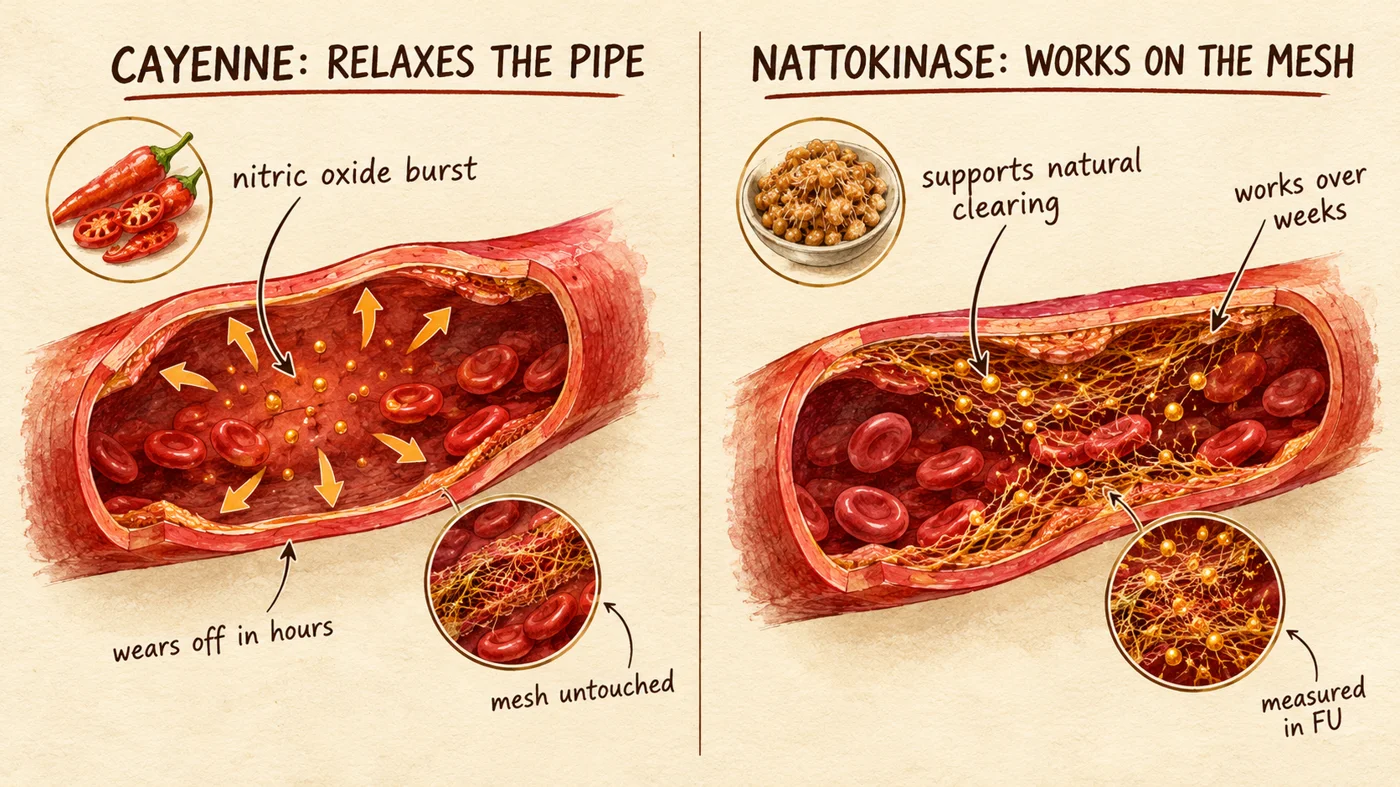
Cayenne Relaxes The Pipe. Nattokinase Works On The Mesh.
The answer was a word I’d never seen on a supplement label: fibrin.
Fibrin is a sticky protein mesh your body uses to patch everyday wear inside your blood vessels. It’s meant to be temporary: once the patch has done its job, the body clears it away.
That’s why it matters for your arteries, not just for how warm your hands feel.
The catch: that clearing slows down with age. What stays behind can hold on to what builds up along vessel walls, which is why circulation can feel slower long before a lab number changes.
A standard cholesterol test doesn’t measure fibrin at all.
Relaxing the pipe changes how wide it is for a while. Working on the mesh changes what’s inside it.
Cayenne pepper
Relaxes the pipe
Capsaicin triggers a short burst of nitric oxide that briefly relaxes blood vessels. A real effect, but a temporary one that leaves the mesh untouched.
Nattokinase
Works on the mesh
An enzyme from natto, fermented soybeans, that supports the body’s own fibrin-clearing process: the slow, steady work behind healthy blood flow.
Nattokinase was discovered in 1980, when a Japanese researcher tested more than 170 foods for natural fibrin-clearing activity. Natto, a breakfast staple in Japan for over 1,000 years, came out on top.
Side by side, the choice was clear.
Side by side
The Comparison That Changed My Mind
Cayenne
Nattokinase 10,800 FU
Type of evidence
Diet pattern studies
Clinical research, measured over months
How it works
Briefly relaxes vessels
Supports natural fibrin clearing
Daily maintenance
Short-term vessel relaxation
Long-term support for healthy arteries & blood flow
Dose standard
Heat units
FU: measured enzyme activity
Timeframe
No change after 6 months
First changes often by weeks 3–4
But not every nattokinase is the same. The detail that mattered most was one I’d never thought to check: the dose.
The detail most labels hide
The Number On The Label That Matters Most
Nattokinase is measured in FU (fibrinolytic units): how much fibrin-clearing activity the enzyme has. Unlike heat units, FU measures the ingredient’s activity, not its strength of flavour.
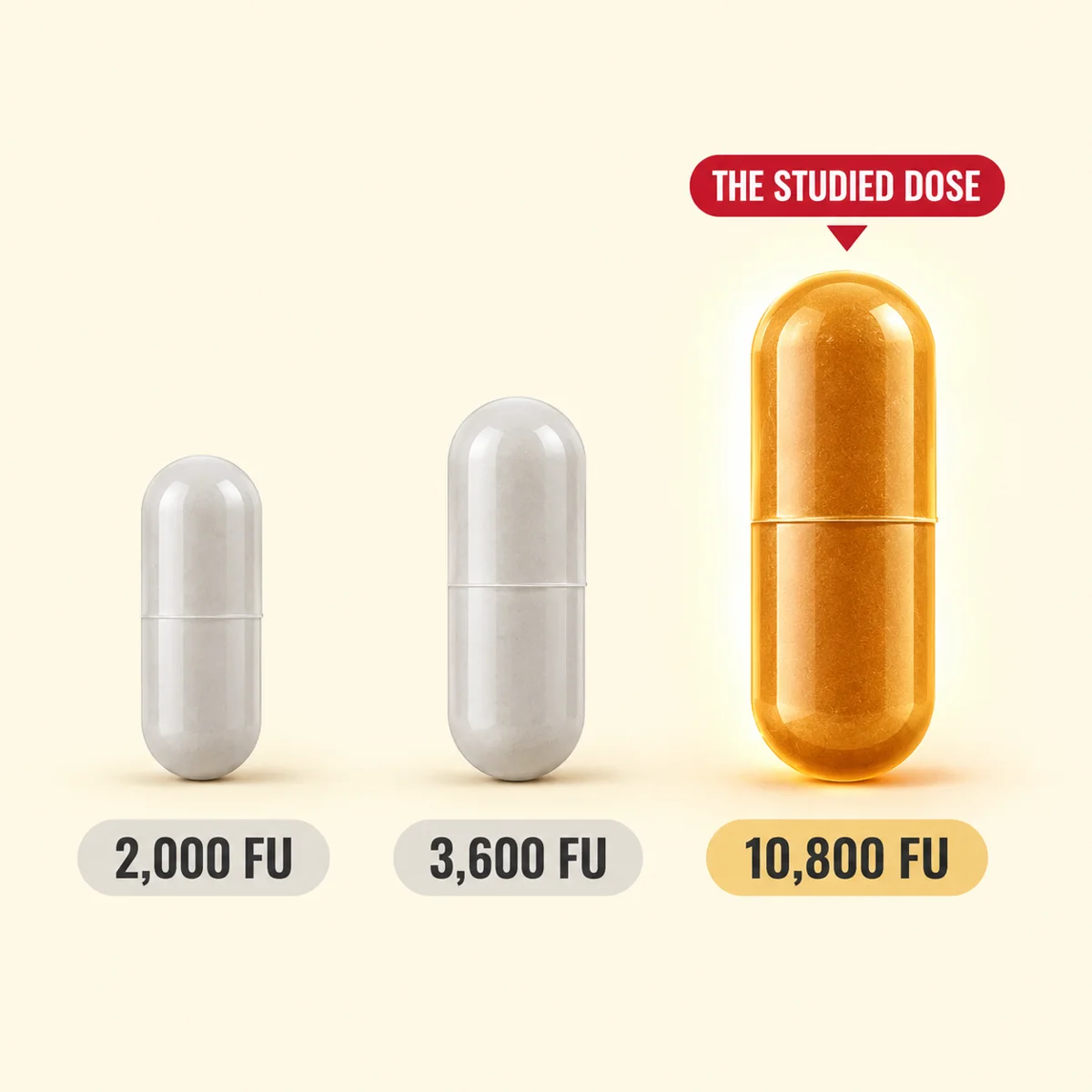
The largest published study followed 1,062 adults for 12 months and compared 3,600 FU a day with 10,800 FU. The smaller amount showed little.
At 10,800 FU, researchers reported favourable outcomes for overall arterial health and healthy cholesterol maintenance.
So I went back to the pharmacy and read the nattokinase labels. Most were around 2,000 FU.
Some didn’t list FU at all. That isn’t a weaker version of the studied dose; it’s a dose the research doesn’t support.
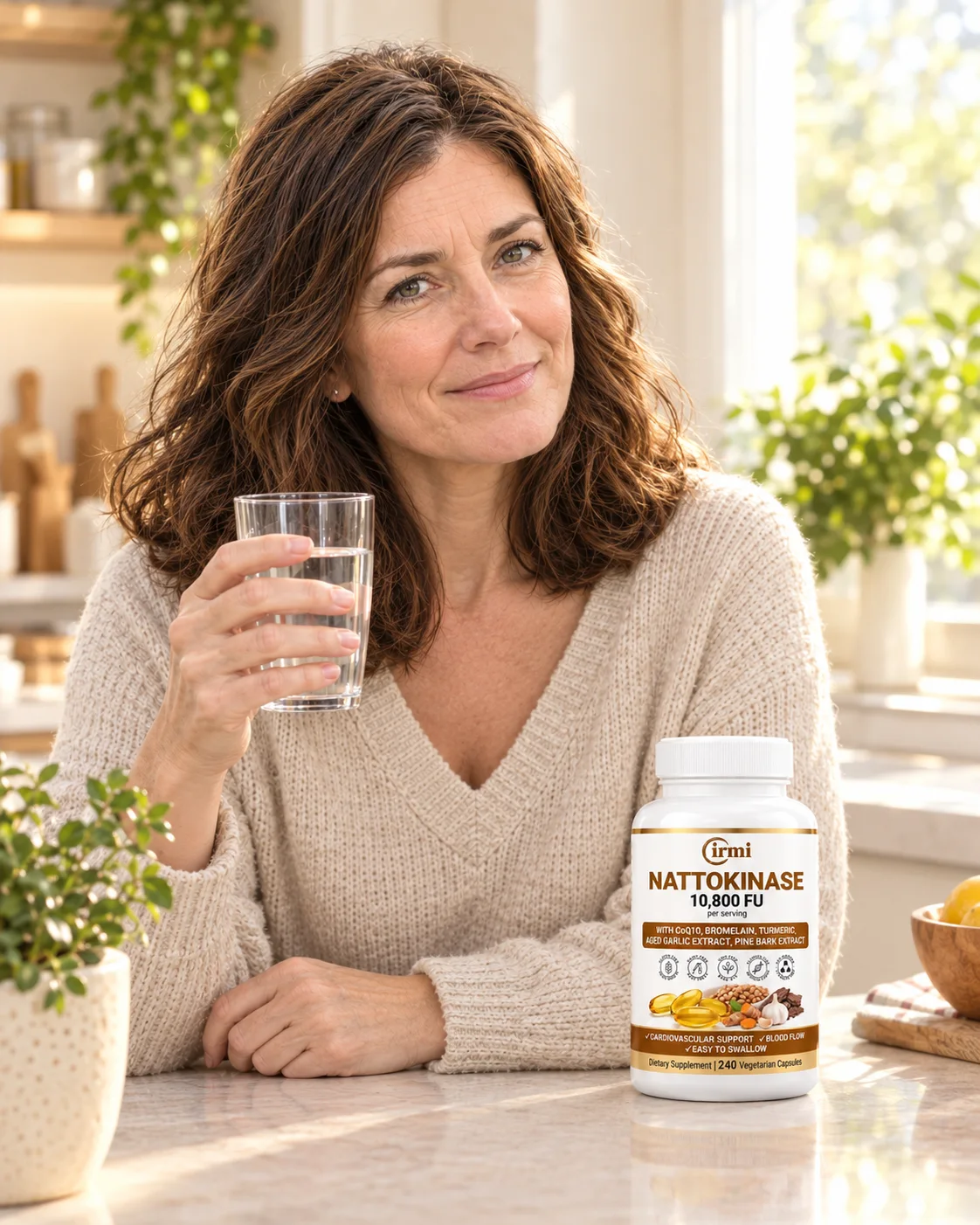
The formula I picked is made at 10,800 FU per serving, the exact number from the study. That decided it.
So I switched, and this time I gave it real time. Here’s what happened.
What changed, and when
My First 12 Weeks After Switching
Same routine as the cayenne test, same weekly check, notes every Sunday. The difference: this time I knew the enzyme needed weeks, not an afternoon.
Weeks 1–2
Quiet, on purpose
Two capsules every morning before breakfast. No natto taste, no heaviness. Just building the habit.
Weeks 3–4
The first real difference
Warmer hands and feet in the evening. It was the first winter evening I didn’t reach for a blanket.
Weeks 5–8
No longer an experiment
Stairs felt easier, afternoons lighter, and I felt confident in my daily routine.
Weeks 9–12+
Part of my routine
The research measured its changes over a full year, so I’m in it for the long run.
Looking back, the six months weren’t the real cost. The guessing was.
Why I’m sharing this
The Real Cost Of Guessing
Six months is a long time to spend on something that was never likely to work, telling yourself you’re “doing something” while only your receipts change.
Six months taught me that “natural” isn’t the same as “studied”.
Staying on cayenne
Months on something with no controlled-trial support for circulation
No dose tied to anything your circulation responds to
The same uncertainty at every check-up
What I take instead
10,800 FU, the daily amount used in the largest published study
A dose measured by enzyme activity
Plus CoQ10, aged garlic, turmeric, bromelain and pine bark in the same serving
Third-party tested, with a 60-day money-back guarantee
Is it right for you?
It’s a strong fit if you’ve noticed cold hands and feet or heavy legs by the afternoon, and want steady, long-term artery and circulation care.
Especially if you’ve already tried “natural” options like cayenne and want something with a dose you can check against the research.
And it turns out I wasn’t the only one who made this exact switch.
Real customer experiences
Swapping Cayenne For Artery & Circulation Support
★★★★★
“I took cayenne for a year because it was natural. Switched in spring, and by summer my feet weren’t freezing at night anymore.”
Harriet L. · Verified Customer
★★★★★
“What sold me was the dose. Every other bottle I looked at was a fraction of what the research used.”
Owen M. · Verified Customer
★★★★★
“My legs used to feel like lead by four o’clock. Two months in, my afternoons are mine again.”
Celia R. · Verified Customer
Today’s offer
Give Your Circulation 60 Risk-Free Days
The same formula I switched to, at the dose the research used, with time built in to feel it.
Buy 1, Get 1 FREE
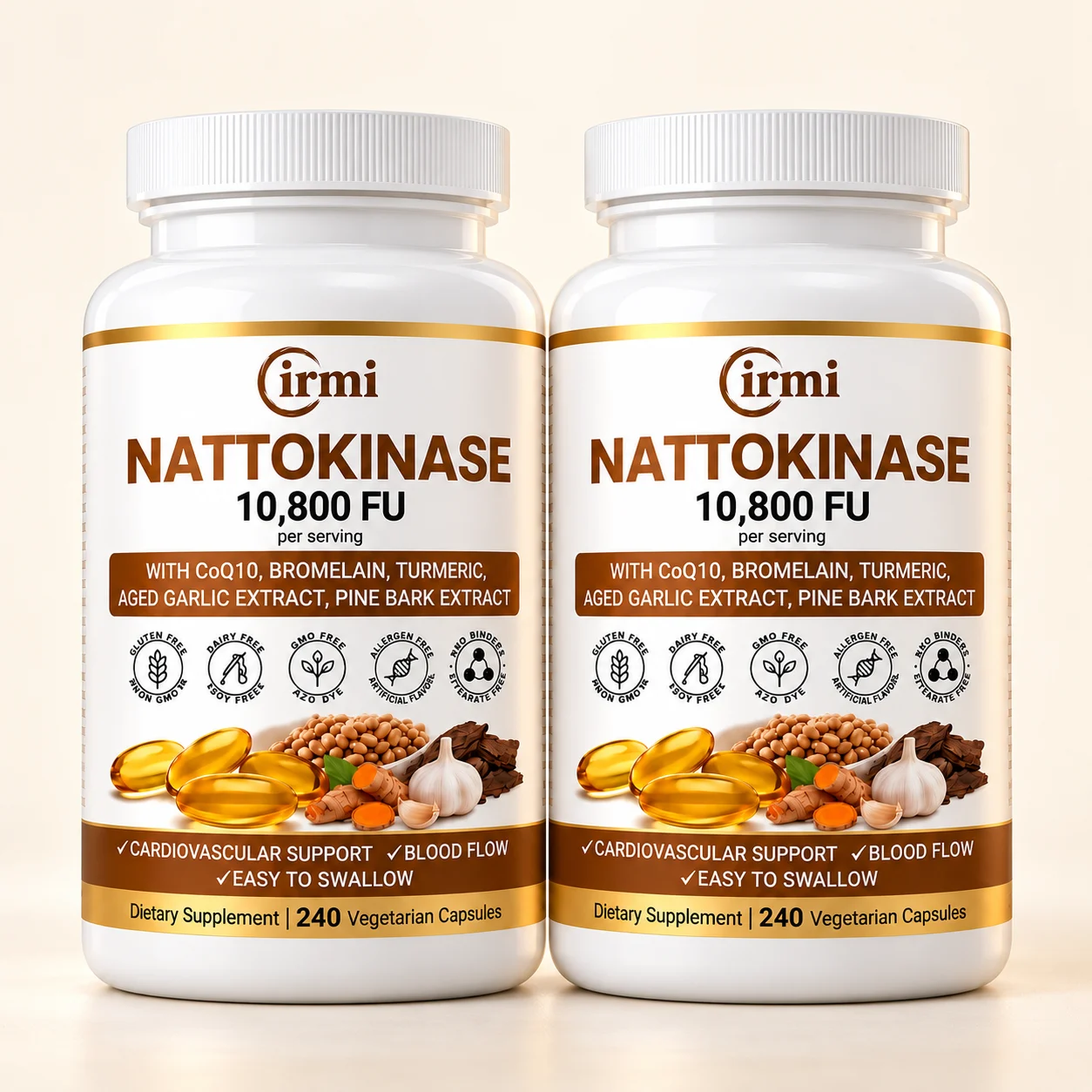
Irmi® Nattokinase 10,800 FU Complex
10,800 FU nattokinase per serving
With CoQ10, aged garlic, turmeric, bromelain & pine bark
60-day money-back guarantee. Room to try it properly, at your own pace.
Questions, Answered
How is 10,800 FU different from other nattokinase?
FU (fibrinolytic units) measures enzyme activity, not weight. Two bottles with the same milligrams can deliver very different activity, which is why the FU number matters.
Many nattokinase products give 2,000–4,000 FU per serving. Irmi gives the full 10,800 FU in one serving, plus CoQ10, aged garlic, turmeric, bromelain and pine bark, so you don’t need five separate bottles.
When will I start feeling the difference?
Many people notice warmer hands and feet and steadier daily energy within the first few weeks.
With consistent daily use, the full benefits build over 60–90 days, which is why every order comes with our 60-day money-back guarantee and every bottle lasts a full 4 months.
Can I take it with medication?
If you take any prescription medication, especially blood-thinning or blood pressure medication, or have surgery scheduled, consult your doctor before taking Irmi, as nattokinase may interact.
Also check with your doctor if you are pregnant, nursing or have a bleeding disorder.
Is every batch lab tested?
Yes. Every batch is independently third-party tested for identity, potency and purity, and made in a cGMP-certified facility with Non-GMO ingredients in vegetarian capsules.
What if it’s not right for me?
You’re covered by our 60-day money-back guarantee. Give it the 8 weeks it deserves, and if you’re not satisfied for any reason, contact our support team for a full refund.